
Miami Probate Lawyer Guide for First-Time Executors
Serving as an executor for the first time can be overwhelming. Executors are responsible for managing an estate, paying debts, and distributing assets, all while navigating Florida probate law. A Miami probate lawyer provides essential guidance to ensure that first-time executors fulfill their duties efficiently and legally. 1. Understanding the Role of an Executor An […]
How Probate Lawyers Protect Beneficiary Rights in Miami
When a loved one passes away, beneficiaries rely on the probate process to receive their rightful inheritance. In Miami, probate lawyers play a crucial role in ensuring that beneficiaries’ rights are protected and that the estate is administered fairly according to Florida law. 1. Understanding Beneficiary Rights in Miami Probate Beneficiaries are individuals or entities […]
Probate vs Trust Administration in Miami: What’s the Difference?
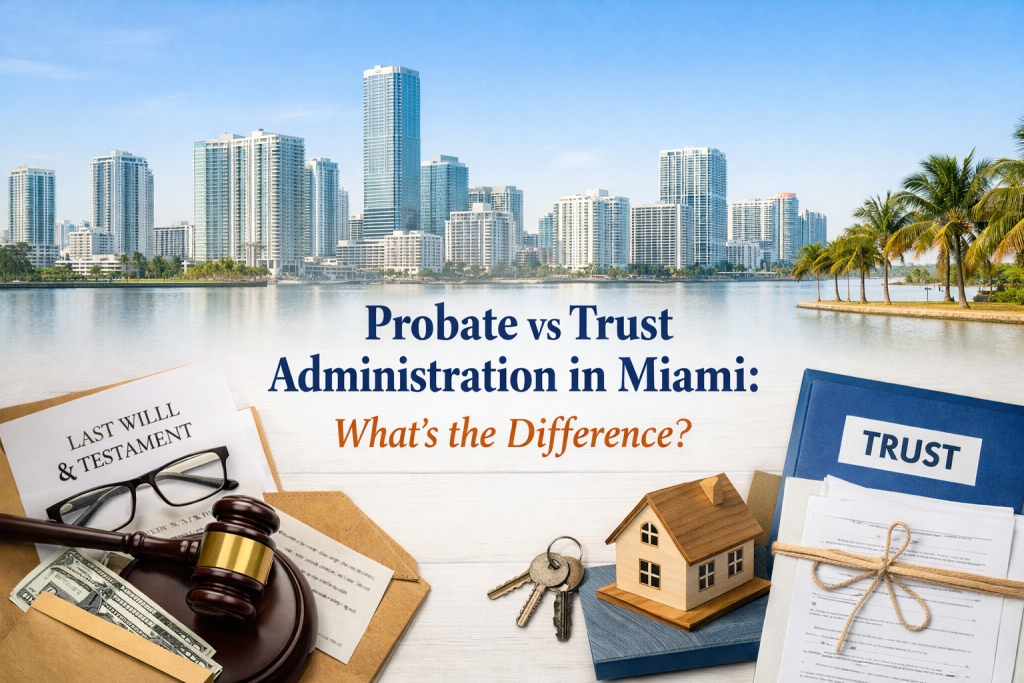
Estate planning in Miami often involves two main processes for transferring assets after death: probate and trust administration. While both handle estate distribution, they operate differently and can significantly affect how quickly and efficiently your heirs receive their inheritance. 1. What is Probate in Miami? Probate is the court-supervised process of validating a will, paying […]
What Assets Must Go Through Probate in Miami?
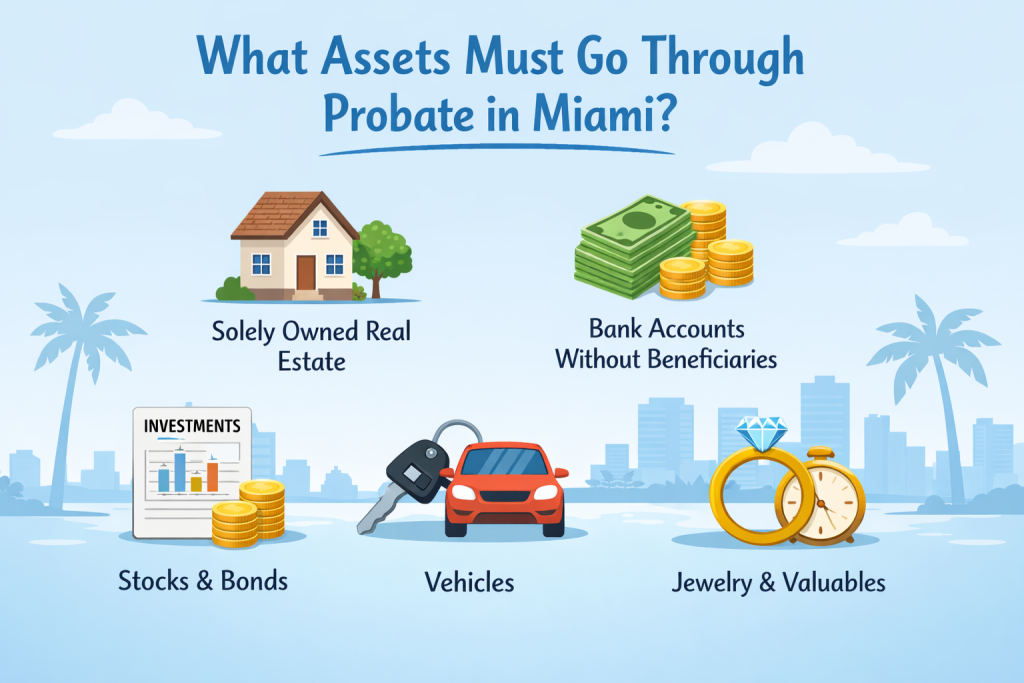
When someone passes away in Miami, determining which assets go through probate is a critical step in estate administration. Probate is the legal process that validates a will, pays debts, and distributes assets to heirs. Understanding which assets are subject to probate can help families plan effectively and minimize delays or disputes. 1. Assets That […]
How Probate Lawyers in Miami Help Business Owners Protect Their Legacy

Business owners in Miami face unique challenges when it comes to estate planning and probate. Unlike personal assets, businesses require careful legal guidance to ensure continuity and protect the owner’s legacy. A Miami probate lawyer plays a critical role in helping business owners safeguard their companies for heirs and minimize financial disruption. 1. Planning for […]
Why Early Estate Planning Saves Miami Families Money
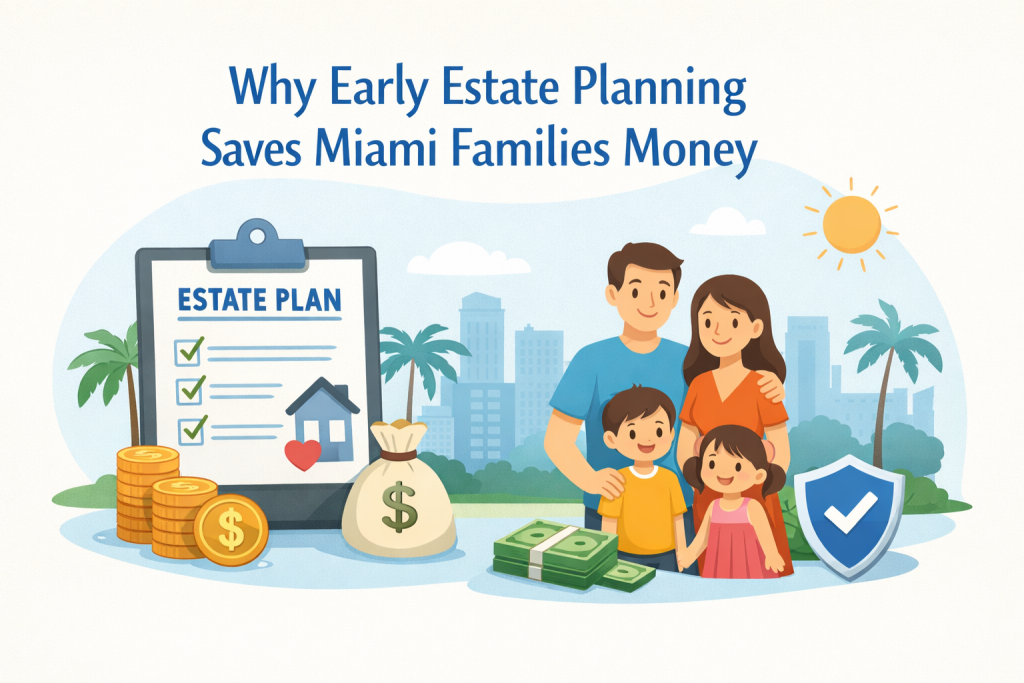
Estate planning is a critical step for Miami families looking to protect their assets, reduce legal complications, and minimize costs after a loved one passes away. Planning ahead can prevent common pitfalls and save significant money in the long run. 1. Reduces Probate Costs Probate is the court-supervised process of distributing a deceased person’s estate. […]
What Role Does an Executor Play in Miami Probate Cases?
When a loved one passes away in Miami, the executor plays a central role in guiding the estate through probate. Executors, also known as personal representatives, are responsible for managing the deceased’s assets, paying debts, and distributing property according to the will or Florida intestacy laws if there is no will. 1. Filing the Will […]
How to Find a Trusted Probate Lawyer in Miami for Your Family
When a loved one passes away, Miami families face both emotional stress and complex legal obligations. Probate can be overwhelming without the right guidance. Hiring a trusted probate lawyer in Miami ensures your family navigates estate administration efficiently, protects assets, and avoids costly mistakes. Why a Trusted Probate Lawyer Matters Probate isn’t just paperwork. It […]
How Miami Probate Lawyers Handle Estates With Investment Assets

Probate becomes more complex when estates include investment assets such as stocks, bonds, mutual funds, or retirement accounts. In Miami, probate lawyers play a crucial role in managing these financial assets to ensure proper distribution and compliance with Florida law. 1. Identifying Investment Assets The first step in managing an estate with investments is identifying […]
What Happens When Someone Dies Without a Will in Miami?
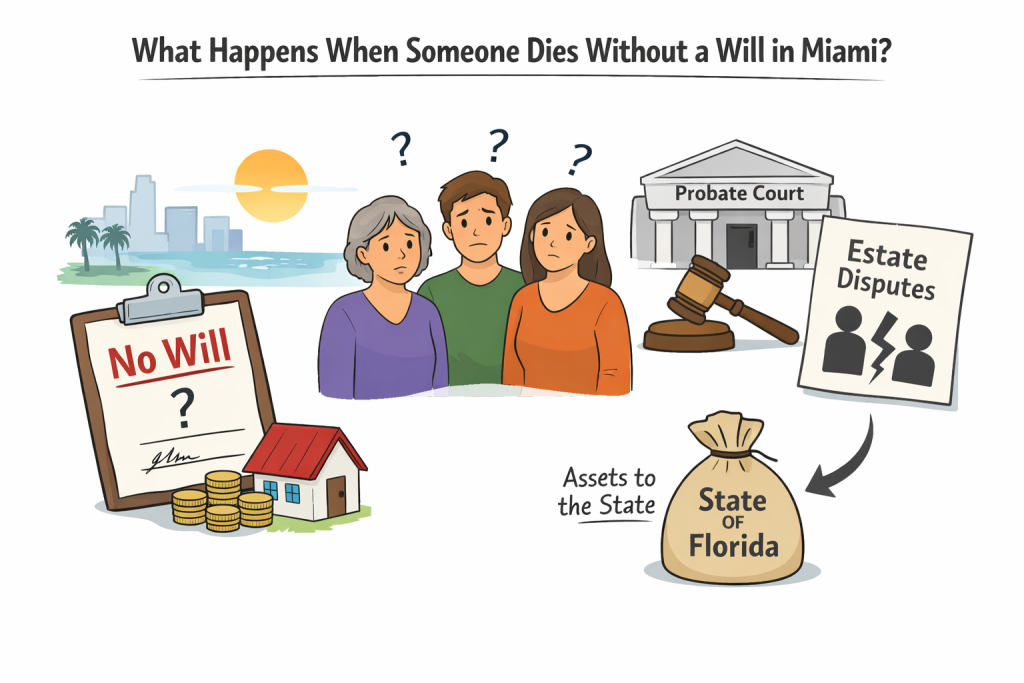
Dying without a will, known as intestate, can create confusion and disputes among heirs. In Miami, Florida probate laws outline how an estate is distributed when a person passes away without a legally valid will. Understanding this process is crucial for families to navigate probate efficiently and minimize conflicts. 1. Intestate Probate in Miami When […]
