
Can an Executor Be Personally Sued for Estate Debts in Florida?
In Florida, executors (personal representatives) are not automatically responsible for paying a deceased person’s debts out of their own pocket. However, that protection disappears quickly when an executor makes certain mistakes. Yes — an executor can be personally sued for estate debts in Florida under specific circumstances. Most lawsuits arise not because the debt existed, […]
Bond Requirements for Executors in Florida Probate: When and Why Courts Require Them
Executors in Florida probate are sometimes surprised to learn that a court can require them to post a fiduciary bond before granting authority. A bond is not automatic — but when required, probate cannot proceed without it. Florida probate courts use bonds as a risk-management tool. Understanding when bonds are required, why judges impose them, […]
What Happens When an Executor Makes a Tax Filing Mistake in Florida Probate
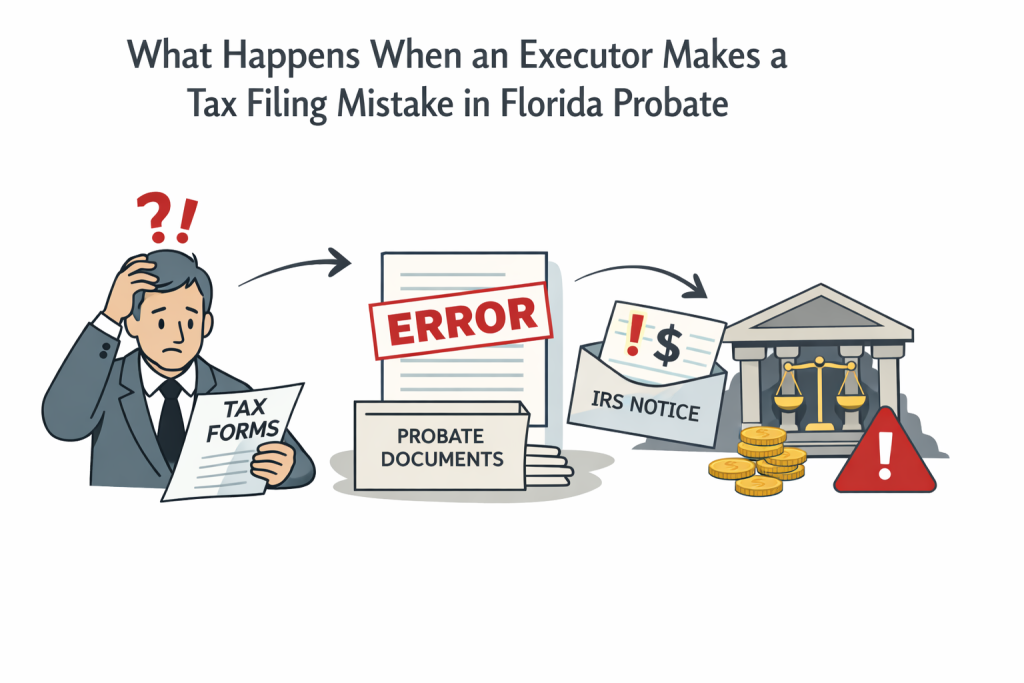
Executors in Florida are responsible for more than distributing assets. They are legally responsible for tax compliance during probate. When tax filings are late, incomplete, or incorrect, the consequences can extend beyond the estate and land directly on the executor. Tax mistakes are one of the most common — and most underestimated — sources of […]
How Executors Can Protect Themselves From Beneficiary Lawsuits in Florida
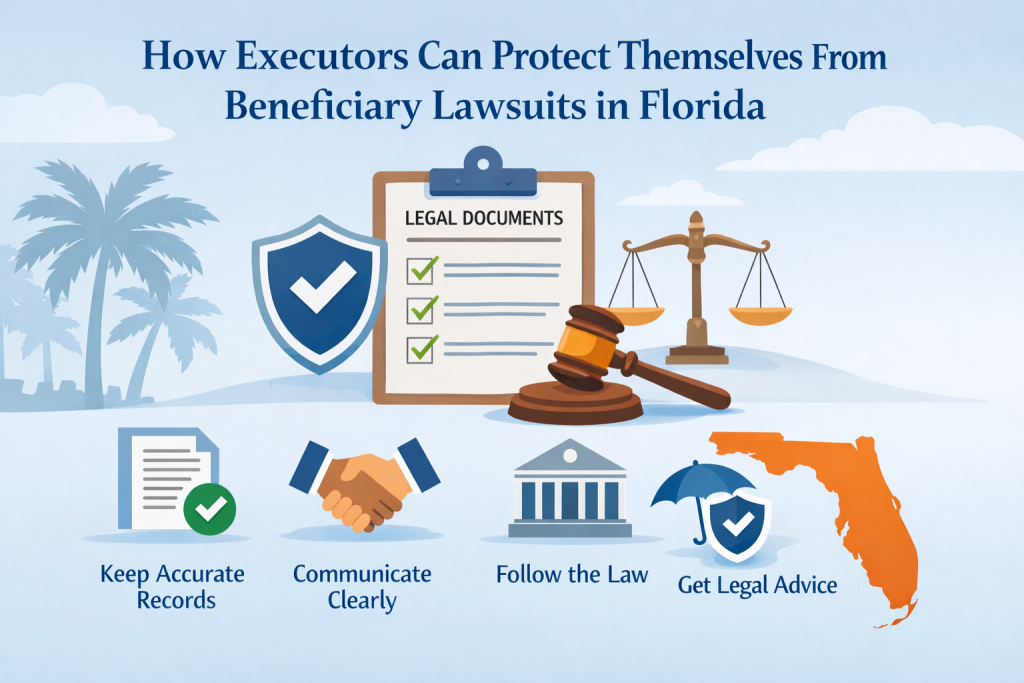
Beneficiary lawsuits are one of the biggest risks facing executors in Florida probate. Most lawsuits are not about theft or fraud — they are about delay, poor communication, perceived favoritism, or procedural mistakes. Executors who assume “doing their best” is enough often learn too late that Florida probate courts apply strict fiduciary standards. This guide […]
Personal Liability Risks for Executors in Florida Probate
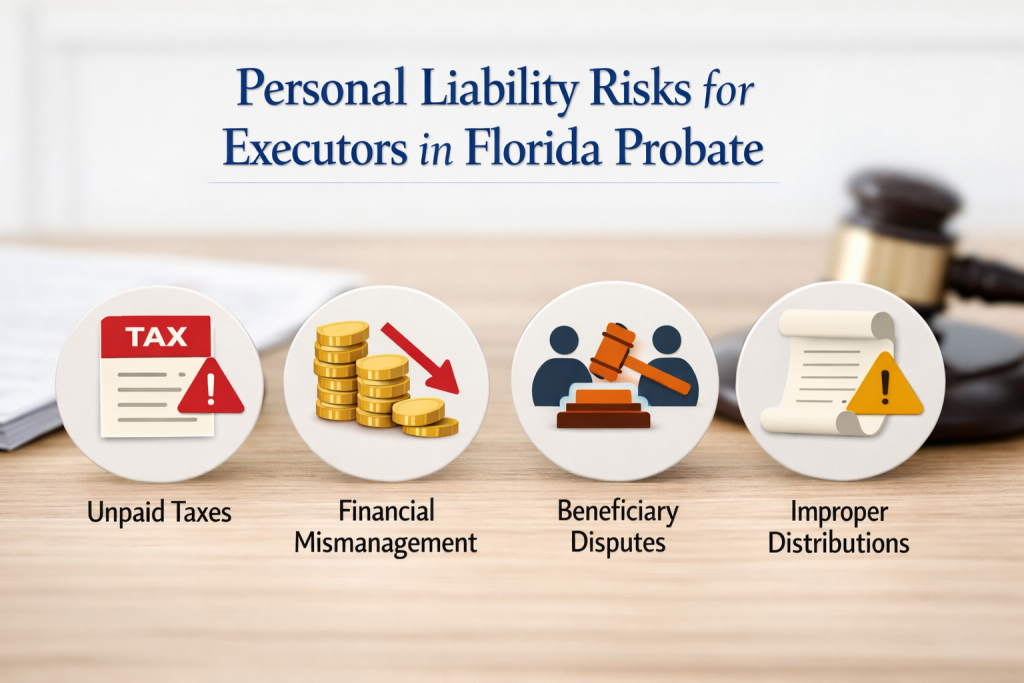
Serving as an executor (personal representative) in Florida is not an honorary role. It is a fiduciary position with real personal liability exposure. Executors can be held financially responsible for mistakes — even when acting in good faith. Florida probate courts do not excuse errors because an executor was inexperienced, overwhelmed, or unpaid. Understanding where […]
Can Probate Be Reopened in Florida After an Estate Is Closed?
Yes — Florida probate can be reopened after an estate is closed, but only under narrow circumstances. Probate courts do not reopen estates lightly. The burden is on the person requesting reopening to prove a legally valid reason. Most requests fail because they are based on regret, family conflict, or newly discovered dissatisfaction — not […]
What Happens If an Executor Misses a Probate Deadline in Florida
Florida probate is deadline-driven. Executors (personal representatives) are expected to act promptly, follow statutory timelines, and comply with court orders. When deadlines are missed, the court does not assume good intentions—it assumes risk. Missing a probate deadline in Florida can lead to delays, financial penalties, court intervention, or removal. In some cases, it can expose […]
How Probate Courts Verify and Approve Personal Representatives in Florida
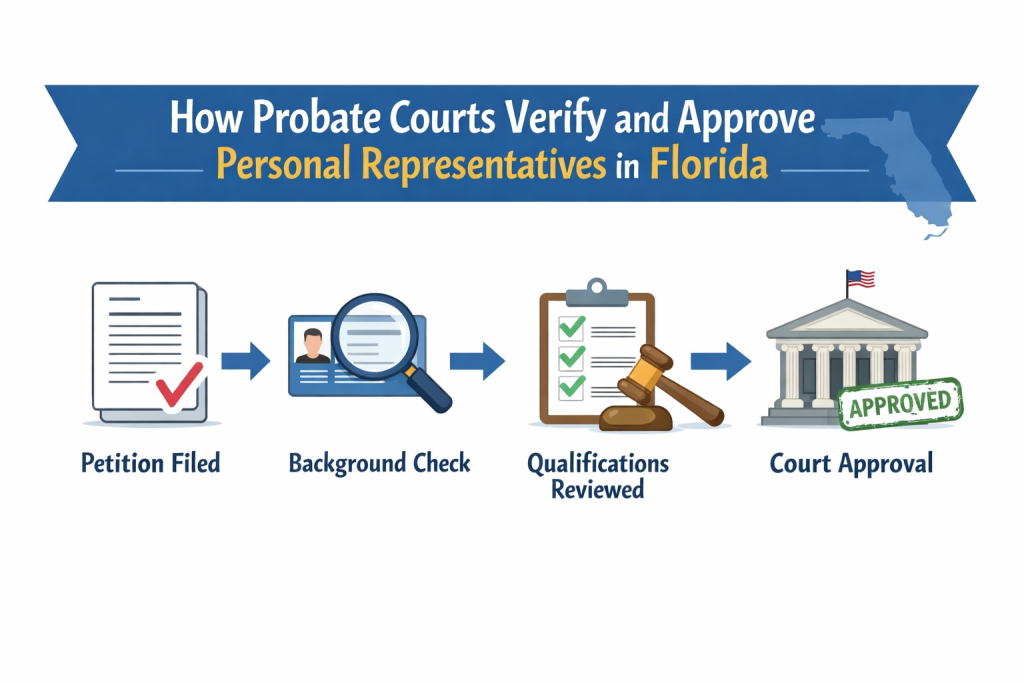
Being named as an executor in a will does not automatically grant authority in Florida. Probate courts independently review and approve every proposed personal representative before issuing Letters of Administration. This court scrutiny exists to protect beneficiaries, creditors, and the integrity of the estate. Understanding how judges evaluate personal representatives helps avoid delays, objections, and […]
Florida Probate Checklist: Documents You Need Before Filing
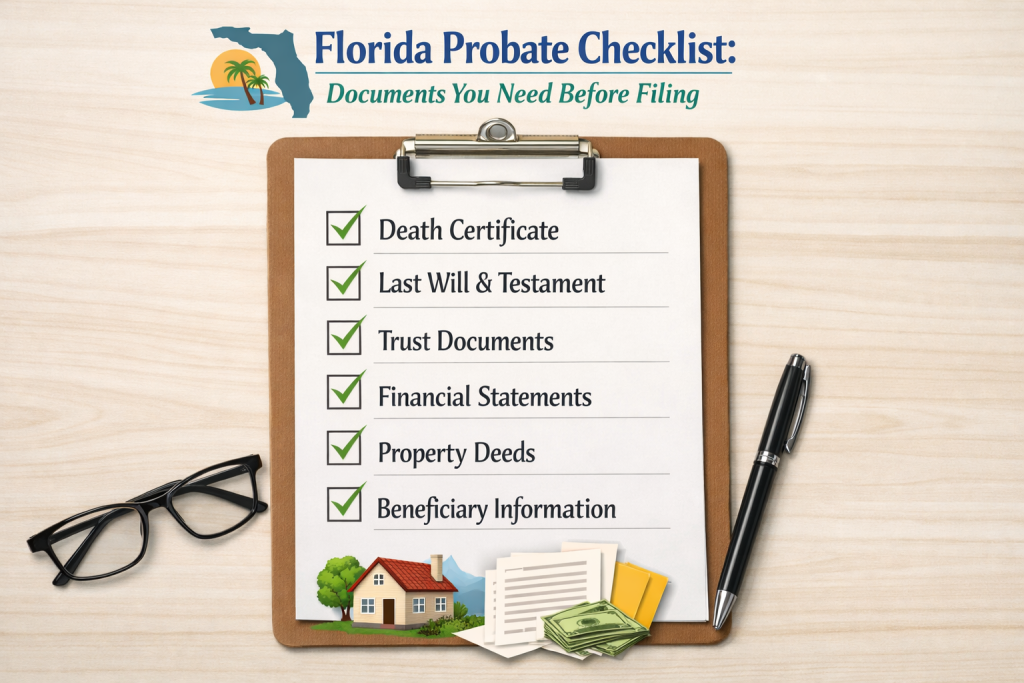
Before a Florida probate case can be filed, the court expects the estate to be document-ready. Missing or incorrect paperwork is one of the most common reasons probate gets delayed, rejected, or unnecessarily expensive. This checklist explains exactly which documents you need before filing probate in Florida, why each one matters, and what happens if […]
What an Executor Must Do in the First 30 Days of Florida Probate
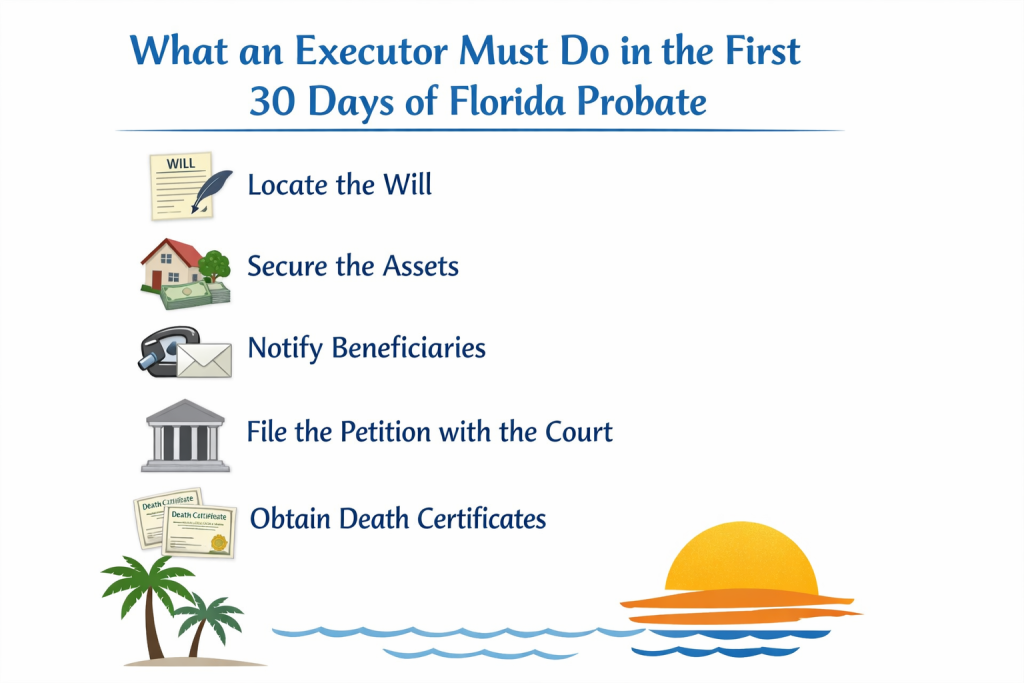
Being named an executor (called a personal representative under Florida law) comes with immediate legal responsibilities. The first 30 days of Florida probate are critical. Mistakes made during this period can delay the estate, increase costs, or expose the executor to personal liability. This guide explains exactly what must happen in the first month, in […]
