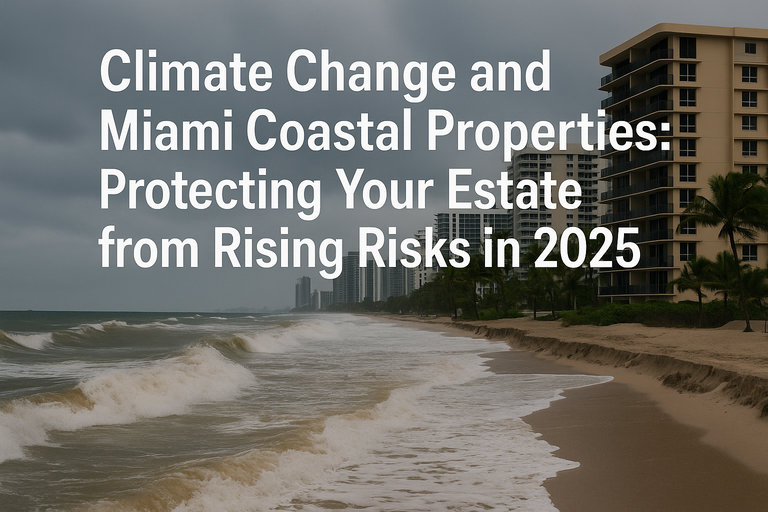
Miami’s coastal properties— from Key Biscayne condos to historic Coconut Grove homes—are often the centerpiece of Florida estates. But with sea-level rise, stronger hurricanes, and higher flood risk, 2025 demands a smarter approach to protecting real estate from devaluation, insurance gaps, and probate complications. If you’re starting from scratch, first see the Florida probate process and our primer on how climate change affects Miami estate planning.
This guide outlines practical strategies to safeguard coastal assets—whether you own a beachfront estate in Sunny Isles Beach or a vacation home in Coral Gables—so your plan fits the realities of 2025 and transfers smoothly to your heirs.
The Growing Impact of Climate Change on Miami Real Estate
Miami sits on the front lines of climate risk, with rising seas and more frequent major hurricanes shaping markets and insurance. These shifts touch estate planning in several ways:
- Property Devaluation: Stricter building codes and flood exposure can cut values in places like Miami Beach and Fisher Island—affecting your taxable estate and beneficiary shares. See probate for Miami real estate owners.
- Insurance Challenges: Premiums continue to climb, and some carriers limit coverage in high-risk zones. Coordinate coverage with your overall plan and simplify probate for your family.
- Probate Complications: Storm damage, valuation disputes, and insurability issues can slow administration—especially with out-of-state heirs or complex assets. Review formal vs. summary administration.
- Tax Implications: Shifts in value change basis, gains, and homestead planning—important alongside the 2025 TCJA sunset strategies.
5 Strategies to Protect Coastal Properties in Your 2025 Estate Plan
1) Transfer Properties to a Revocable Living Trust
Titling your coastal home to a revocable living trust helps avoid court delays—crucial after storm events or when values are disputed. Start with the benefits of a revocable living trust and compare trust vs. will.
- How it works: You serve as trustee; heirs become beneficiaries. On death, the property moves outside probate.
- Climate benefit: Faster distribution even if a hurricane damages the home.
- Florida note: Preserve homestead rights—see homestead in probate and impact of Florida homestead laws.
- Next step: Schedule a consultation to draft a trust and properly retitle the deed.
2) Secure Comprehensive Insurance and Review Annually
Standard homeowners’ policies exclude flood; coastal owners typically need separate flood coverage and should consider higher deductibles or parametric options.
- How it works: Pair homeowners’ insurance with NFIP or private flood; align payouts with your trust or estate documents.
- Climate benefit: Preserves estate value post-storm and funds timely repairs.
- Planning tip: Coordinate policy beneficiaries and payable-to-trust elections so proceeds flow into your comprehensive estate administration plan.
3) Use a Qualified Personal Residence Trust (QPRT)
A QPRT can shift a valuable coastal residence out of your taxable estate at a discounted gift value—useful as exemptions tighten under federal law.
- How it works: You transfer the home to a term trust, retain occupancy, and pass it to heirs at term end.
- Climate benefit: Locks in today’s value before potential climate-driven devaluation.
- Learn more: Qualified Personal Residence Trusts (QPRTs) in Miami and minimize estate taxes in Miami.
4) Plan for Ancillary Probate on Multi-State Properties
Many Miami owners hold homes in New York or the Carolinas where coastal risks also apply. Ancillary probate in another state can slow everything down.
- How it works: Title out-of-state homes into a trust or consider survivorship structures to avoid a second probate.
- Climate benefit: Faster administration even if a second-home market faces storm damage or erosion.
- Start here: Out-of-state assets & Florida probate and international assets planning for cross-border families.
5) Document Climate Resilience in Your Estate Plan
Build resilience language into your will or trust: post-storm repair funds, deductible reserves, or authority to sell/relocate after major damage.
- How it works: Add clauses authorizing trustees to deploy cash for mitigation (elevating equipment, impact windows) or to dispose of high-risk holdings.
- Climate benefit: Heirs aren’t forced into distressed sales.
- Drafting aid: If your trust pays income to current beneficiaries, FUFIPA 2025 can help balance repairs vs. distributions. See FUFIPA and trust distributions.
Why Miami Residents Need a Local Attorney for Climate-Smart Planning
Florida’s homestead protections, lack of a state estate tax, coastal codes, and new fiduciary rules require local judgment. A Miami probate attorney can:
- Preserve homestead benefits inside your trust (homestead guide).
- Apply FUFIPA adjustments when damaged properties disrupt income/principal.
- Coordinate insurance, tax, and titling to maintain value and prevent disputes.
- Reduce conflicts among heirs—see beneficiary dispute strategies and how lawyers mediate family disputes.
If avoiding probate entirely is a goal for a non-homestead property, compare a Lady Bird deed with a revocable trust.
Act Now to Protect Your Coastal Legacy in 2025
With climate pressures rising and federal exemptions tightening, proactive planning matters. Use trusts, align insurance, consider QPRTs, and tighten documents with resilience clauses so your coastal property transfers smoothly—no matter the weather.
Ready to protect your Miami property? Schedule a consultation or contact our team. For more, explore Miami real estate probate and our Learning Center.