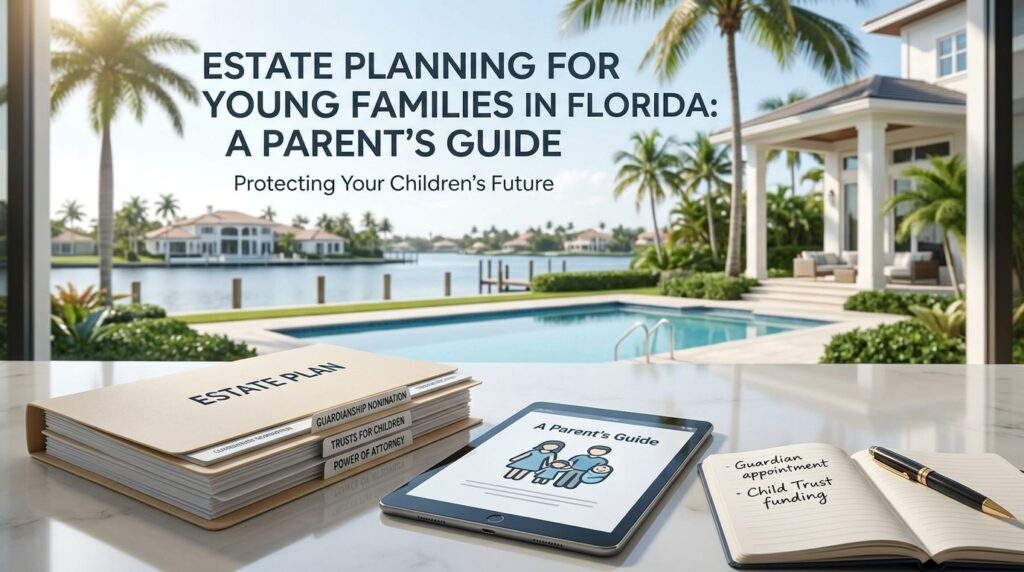
Most parents of young children think estate planning is something for later, for retirees with big houses and investment accounts. But the parents who need a plan most are often the ones with toddlers, a mortgage, and not much savings yet. If something happened to you tomorrow, who would raise your children? Who would manage the money they inherit? Would a judge make those choices instead of you?
This guide walks through estate planning for young families in Florida in plain language: what happens to your children if you die without a plan, how to choose and name a guardian, how a trust for children works, how to set up life insurance correctly, and which documents every parent should sign.
Quick answer: Every Florida parent with minor children should have at least a will that names a guardian, a plan to manage money for the children (usually a trust), life insurance with the right beneficiary, a durable power of attorney, and a healthcare surrogate designation. Without these, a Florida court decides who raises your children, and any money they inherit over $15,000 may be tied up in a court supervised guardianship until they turn 18, when they receive it all at once.
Why Estate Planning for Young Families Matters
Estate planning for parents is really about two things: who takes care of your children, and who takes care of their money. Young families often have more at stake than they realize. A home with equity, a retirement account through work, and a life insurance policy can easily add up to several hundred thousand dollars, all of which would pass to children who cannot legally manage it.
A plan also protects you while you are alive. If an accident or illness leaves you unable to make decisions, the right documents let your spouse or another trusted person pay bills and make medical choices without going to court.
What Happens If a Parent Dies Without a Will in Florida?
If a parent dies without a will, Florida’s intestacy law decides who inherits. If you are married and all of your children are also your spouse’s children, your spouse generally inherits everything. If either of you has children from another relationship, your spouse receives half and your children share the other half. That can mean young children own part of the family home, which a court must supervise.
The bigger concern for parents is custody, covered next. The guide on how to make a legal will in Florida explains how to avoid these default rules, and a Florida wills attorney can make sure your will is signed correctly so it actually holds up.
If a Child’s Parents Die, Who Gets Custody?
If One Parent Dies
In most cases, the surviving parent keeps custody. Florida treats both parents as the child’s natural guardians, and a will cannot take custody away from a living parent who is fit to care for the child. This matters for divorced or separated parents: naming your sister as guardian in your will does not override the other parent’s rights.
If Both Parents Die, Who Gets Custody of the Child?
When both parents die, a Florida court appoints a guardian for the child. The court gives strong preference to the person the parents named in a will or in a written preneed guardian designation, as long as that person is qualified and suitable. If the parents named no one, the court looks to relatives and other interested people, and family members may end up in a dispute over who should raise the children.
That is why child custody after the death of parents is the single most important reason young parents need a plan. Naming a guardian takes one sentence in a will, and it may be the most important sentence you ever sign.
Guardianship of Minors: How to Name a Guardian for Your Children
Florida recognizes two kinds of guardianship for minors, and a good plan addresses both:
| Type | What the Guardian Does | How You Plan for It |
|---|---|---|
| Guardian of the person | Raises the child, makes decisions about school, health, and daily life | Name the guardian in your will or a preneed guardian designation |
| Guardian of the property | Manages money and property the child inherits, under court supervision | Avoid it by leaving money to a trust or a custodian instead of directly to the child |
How to Choose a Guardian
- Values and parenting style. Choose someone who will raise your children the way you would.
- Age and health. Grandparents are loving choices, but think about whether they can handle a teenager in ten years.
- Location and stability. Would your children have to move schools or leave Florida?
- Willingness. Always ask first, and name a backup.
- Money is a separate job. The person who raises your children does not have to manage their money. Many parents name one person as guardian and another as trustee.
Florida Preneed Guardian Designation for a Minor
In addition to your will, Florida lets parents sign a separate written declaration naming a preneed guardian for a minor child. It must be signed in front of two witnesses and can be filed with the clerk of court. It is useful because it can be located and used quickly, and it also covers situations where you are alive but incapacitated.
How to Get Guardianship of a Minor in Florida
If you are a relative or friend trying to become the legal guardian of a child whose parents have died or cannot care for them, the process generally works like this: you file a petition with the circuit court in the county where the child lives, complete a background check and any required training, attend a hearing, and, if approved, receive letters of guardianship from the court. A guardian of the property must also file inventories and annual accountings. A minor guardianship attorney can guide you through each step and help avoid delays.
A Trust for Children: Protecting the Money You Leave
Here is the problem most young parents do not see coming. Under Florida law, a parent can manage up to $15,000 for a child without court involvement. Above that amount, inherited money generally requires a court supervised guardianship of the property, with annual reports and court costs, until the child turns 18. At 18, the child receives everything outright.
Few parents want an 18 year old to receive a large life insurance payout with no guidance. A trust for children solves this. You choose a trustee to manage the money, and you decide how it is used and when your children receive it.
Common Ways to Set Up a Trust for Children
- Testamentary trust. Created inside your will. It is less expensive up front, but the will still goes through probate.
- Revocable living trust. Created now and funded during your life. It avoids probate and can hold your home, accounts, and life insurance. A Florida trust attorney can tailor it to your family.
- Staggered distributions. Many parents release money in stages, such as one third at 25, one third at 30, and the rest at 35, while allowing the trustee to pay for education, health, and housing at any age.
- Common pot or separate shares. A single “common pot” trust lets the trustee spend more on a younger child who still needs support, then divide what is left once the youngest reaches a set age.
The trustee is as important as the guardian. The guide on how to choose a successor trustee in Florida explains what to look for, and the comparison of will vs. trust in Florida helps you decide which structure fits.
Life Insurance and Estate Planning for Young Families
For many young families, life insurance is the largest asset that will pass to their children. Term life insurance is often inexpensive for healthy parents and can replace years of lost income. But life insurance estate planning is less about buying the policy and more about naming the right beneficiary.
Life Insurance Beneficiary: Minor Child
Naming a minor child directly as the beneficiary of a life insurance policy is one of the most common mistakes parents make. Insurance companies will not pay a large death benefit directly to a minor. If the payout is more than $15,000, a court guardianship of the property is usually required, and the child receives everything at 18.
Better options include:
- Name your trust as beneficiary. The money goes to the trustee and is managed under your instructions.
- Name a custodian under the Florida Uniform Transfers to Minors Act. The custodian manages the money until the child turns 21. This is simpler, but offers less control than a trust.
- Name your spouse first and the trust second. Many married parents name the spouse as primary beneficiary and the children’s trust as contingent beneficiary.
The same rules apply to retirement accounts and bank accounts with payable on death designations. The guides on how beneficiary designations work in Florida and POD vs TOD accounts explain how to set them up correctly.
Power of Attorney and Healthcare Documents for Parents
Estate planning is not only about death. If you are in a car accident or become seriously ill, someone needs legal authority to act for you.
- Durable power of attorney. Lets your spouse or another trusted person pay bills, manage accounts, and handle the mortgage if you cannot. Without it, your family may need a court guardianship.
- Healthcare surrogate designation. Names who makes medical decisions for you.
- Living will. States your wishes about life support.
- Healthcare surrogate for your minor child. Florida allows parents to name a healthcare surrogate for a minor child, so a grandparent or babysitter can consent to medical treatment if you cannot be reached, such as while you are traveling.
Power of Attorney for Your Own Parents
Many young parents are also caring for aging parents. If your mother or father is still able to make decisions, they can sign a power of attorney and healthcare surrogate designation naming you. Once they lose capacity, it is too late to sign, and the family may need a court guardianship instead. Having this conversation early is one of the kindest things you can do for everyone involved.
Estate Planning for Young Adults: When Your Child Turns 18
On their 18th birthday, your child becomes a legal adult. From that day forward, you no longer have automatic authority to see their medical records, speak with their doctors, or manage their finances, even if they still live at home or you pay their tuition.
Estate planning for young adults is simple and inexpensive: a durable power of attorney, a healthcare surrogate designation, and a HIPAA authorization let you help if your college student is hospitalized or needs assistance. Without them, parents may need to seek guardianship of an adult child, a court process meant for adults who cannot make their own decisions. For an adult child with a developmental disability, Florida also offers a more limited process called guardian advocacy, which a guardianship attorney can explain.
Estate Planning Checklist for Young Families
| Document or Step | Why It Matters |
|---|---|
| Will for parents naming a guardian and backup | Lets you choose who raises your children |
| Preneed guardian designation for minors | Gives the court a clear, quickly available choice |
| Trust for children | Avoids court guardianship of money and controls when children receive it |
| Updated life insurance and account beneficiaries | Keeps payouts out of court and away from an 18 year old |
| Durable power of attorney | Lets someone manage your finances if you cannot |
| Healthcare surrogate and living will | Covers medical decisions and end of life wishes |
| Healthcare surrogate for each minor child | Allows caregivers to consent to treatment when you are unreachable |
| Letter of wishes for the guardian | Shares your hopes about school, faith, and values |
Review your plan after every major life event: a new baby, a move, a divorce, or a change in who you would want as guardian. The guide on how to update or change your will in Florida explains when a small change is enough. If you are raising stepchildren or children from a previous relationship, the extra steps are covered in estate planning for blended families in Florida.
Frequently Asked Questions
What is estate planning for young families?
If both parents die, who gets custody of the child in Florida?
If one parent dies, does the other parent get custody?
How do I name a guardian for my children in Florida?
Should I name my minor child as a life insurance beneficiary?
Do I need a trust for my children?
How do I become the legal guardian of a child in Florida?
What documents does my 18 year old need?
How much does a will for parents cost in Florida?
When should young parents update their estate plan?
Work With a Florida Estate Planning Attorney
A few documents signed today can decide who raises your children and whether their inheritance is managed by someone you trust or by a court. If your family is already dealing with a loss, our probate services and guardianship services can help you protect the children involved, and the comparison of probate vs. trust administration explains what comes next.
Attorney Yanitza Schoonover helps Florida parents name guardians, create a trust for their children, coordinate life insurance beneficiaries, and protect the family home with a Lady Bird deed. She also plans ahead for long term care risks such as Medicaid estate recovery when aging parents are part of the picture. You can contact the firm to get started.
Call (305) 299-7496 or email info@estateplanningattorney.us to schedule a free initial consultation. Phone and Zoom appointments are available Monday through Sunday, 8:00 AM to 9:00 PM.
The Schoonover Law Firm, P.A. | 6303 Waterford District Drive, Suite 400, Miami, FL 33126 | Florida Bar #124081